
Printable party games for groups
A printable game can turn a table full of friends into a proper night in, without a box to assemble or an hour of rules before anyone plays.
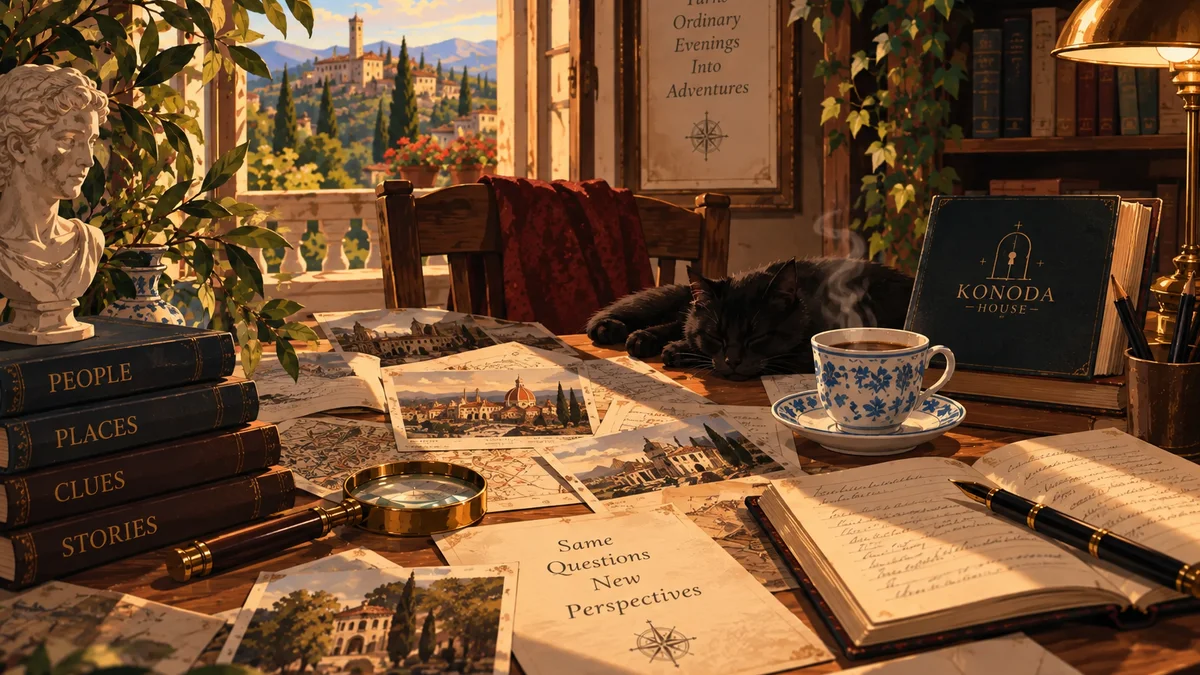
Printable games help when you want to do something with a group, without buying another boxed game or inventing a different activity for every guest. Download the PDF, print the pages you need, and the evening already has a place to start.
What to check before choosing
- Player count: the game should give everyone room to take part, not just the fastest or loudest people.
- Timing: for a dinner, 60–120 minutes is usually better than something that takes the whole night.
- Setup: do you only need a printer, paper, and pens, or do you have to build materials before guests arrive?
- Clarity: the instructions should make sense even if nobody has played before.
Why PDF games work well for groups
A PDF removes much of the logistics. There is no shipment to wait for, no missing component to replace, and no complicated deck to sort. You can prepare the pages in advance, print what you need, and have everything ready before your friends arrive.
It also helps when the plan comes together at the last minute. If you have a printer and a clear table, you can buy it and play the same evening. For a group, that matters, especially when guests have different schedules or live in different places.
Quick games or a mystery to solve?
Quick games are great for breaking the ice or filling a short break. A printable mystery has a slower, more collaborative rhythm: the group reads, compares information, and builds a theory. You do not need a winner every round, because the pleasure comes from working out what happened together.
One ready-to-play example
Theft at Venier Palace is designed for 1–6 players and arrives by email immediately after purchase. Print the complete PDF, share the documents, and follow the trail of a missing portrait in Venice in 1774. It works with friends, family, or a small group that would rather discuss clues than play characters.
The Italian version is available in A4. The English version comes in both A4 and US Letter, so your group can print the dossier in the format that suits its printer best.
A five-minute setup
- Download the PDF from the purchase email.
- Print the pages and keep any hints or solution separate.
- Set out pens, a sheet for notes, and enough room to compare the documents.
- Read the instructions together and let the investigation begin.
Sharing pages without table chaos
When you print a game for a group, first impressions matter almost as much as the rules. If you arrive with an identical stack and nobody knows where to start, the evening tires before you open the brief. Prepare two neat piles: documents to read first, and material for later if the case is phased. With four or five people, one copy per pair works well-take turns reading aloud so nobody sits silent for twenty minutes. With six players, number pages lightly in pencil on the back so when someone says “back to statement three” everyone finds the same sheet. Keep a corner of the table clear for pages already discussed; it lowers the chance you reread the same clue twice without noticing.
Duplex printing saves paper but can make side-by-side comparisons harder. For mysteries with maps or tables, consider separate black-and-white sheets so the group can lay them next to each other while debating. If someone prefers digital, avoid everyone following a private phone PDF-you lose the spoken back-and-forth that makes printable games fun. One shared tablet in the centre can work in a pinch, but paper stays the most democratic tool: everyone sees the same thing at once, without zoom or notifications.
Mixed groups: quiet voices and loud ones
A printable friends’ game works when the format does not only reward whoever interrupts first. Collaborative mysteries help because the goal is shared-you are not scoring points, you are trying to understand a story. Try a simple rhythm: after each document, everyone names one thing they noticed, starting with whoever spoke least last round. It is not therapy circle; it is a practical way to surface details that otherwise stay in the margin. The person who loves dominating talk can be “official reader” for a stretch, then hand off. Quieter players can own the timeline or name list-light roles, not acting.
When not everyone knows each other well, a PDF with a clear story avoids embarrassing games built on personal anecdotes. You talk about alibis, times, and contradictions-not real secrets. After an hour the ice is often broken because you have argued politely about who had access to the studio or who saw what at midnight. That is a conversation a classic party game sometimes cannot spark, especially when ages and interests differ.
Timing and breaks: you do not need one sprint
Many groups overestimate how much they must finish in one sitting. A sixty-to-one-hundred-twenty-minute printable mystery can split in two without losing tension, especially if the PDF is phased. Pause between phases for a drink, an urgent message, or simply stretching your legs. When you return, spend two minutes on your notes-often enough to re-enter the case without starting over. That helps when you have teenagers or older guests who prefer a slower pace.
If dinner is part of the night, do not read statements while serving courses. Use the game as the thread after food: clear the table centre, phones face-down, dossier in the middle. A common mistake is starting too early and stopping every five minutes for the kitchen or dishwasher. Better to announce a start time and protect it-even forty-five consecutive minutes. The group feels you are doing something intentional, not accidental.
Printing, format, and small technical details
Before inviting six people, test-print the first pages. Check text is not clipped and maps are readable. On a budget printer, bump contrast slightly or print maps on separate sheets instead of duplex. For the Italian version of a case like Theft at Venier Palace, A4 is standard; English often offers A4 and US Letter-helpful if someone prints from abroad. Bring pens that actually write-it sounds trivial, but a group stopped for ink loses momentum.
If someone cannot print at home, use a quick copy shop the day before, or designate one printer for the group and split paper cost. What matters is identical material when you start-avoid two people on different versions because they downloaded updates at different times. Download once, share the file if needed, and lock the version for the night.
- Clips grouped by document type (statements, maps, letters).
- One blank sheet in the centre for a shared timeline.
- An envelope or folder for hints and solution, away from the table.
After play: replay, pass it on, debrief
One advantage of printable games is the dossier stays physically yours. Pass it to friends who do not know the solution, or shelve it and replay months later when details have faded. Without fresh memory, some clues land differently and the talk changes. If you replay with the same group, swap light roles: the note-taker reads, the reader builds the timeline. It is not a new game, but it renews attention.
Take ten final minutes to debrief: what convinced you, which suspect you dropped too late, which document deserved a second read. That closes the night better than a vague “that was fun.” If you use a Konoda account, the code in the PDF lets you log the completed case and earn XP toward rewards and discounts-a small ritual that turns a friends’ night into something you can continue with the next dossier.
Why a PDF mystery beats an improvised game
Improvising with board games picked last minute can work, but someone must already know the rules and the group must accept learning while playing. A printable dossier arrives structured: brief, documents, progression. You are not inventing the night while cooking or texting delays. For the organiser, that is freedom. For guests, clarity. Everyone knows they will not perform an awkward character or sing under pressure.
Theft at Venier Palace is a concrete example for groups of one to six: a missing portrait in Venice in 1774, materials to compare, no moderator. You receive it by email right after purchase, print, and sit down. For a friends’ night that wants something deeper than an icebreaker but lighter than a costume murder-mystery dinner, it is a balance hard to replicate with homemade materials.
Mixed evenings: age, language, expectations
In groups mixing couples, colleagues, and relatives, expectations about “games” can diverge sharply. Someone fears embarrassment, someone wants to win, someone only wants to listen. A printable mystery allows different levels of involvement: read aloud for listeners, let others take notes, pause to explain a historical term if the setting is far in the past. Announce at the start there is no race and changing your mind is normal.
If the group speaks different languages, confirm which PDF version you buy beforehand. Konoda offers localised materials-not just translation, but paper format too. One language per night beats mixed documents that slow every page. For bilingual groups, you can alternate readers and summarise, but only if everyone agrees-the fun should not become an exam.
A quick checklist for the organiser
If you are the one proposing the game, the night improves with small steps that do not take hours. Message guests the day before with time, estimated duration, and what to bring: no costume, just attentive eyes. Set out water and snacks away from pages so hands stay clean. Check there are enough chairs and even light. If someone asks “is it hard?”, answer honestly: it needs attention, not a criminology degree.
When everyone is seated, read the brief together before handing out the rest. That aligns tone and goal. Then choose whether to open everything at once or follow the PDF order. For a first-time group, suggested order reduces confusion. When you close the case, leave unhurried space for a final debrief-that memory travels home with you more than the answer on the website.