
Brain Games and Puzzle Books vs Printable Case Files: Same Friends, Different Format
Your group already loves logic; a printable case file turns that appetite into a shared mystery instead of another solo grid.
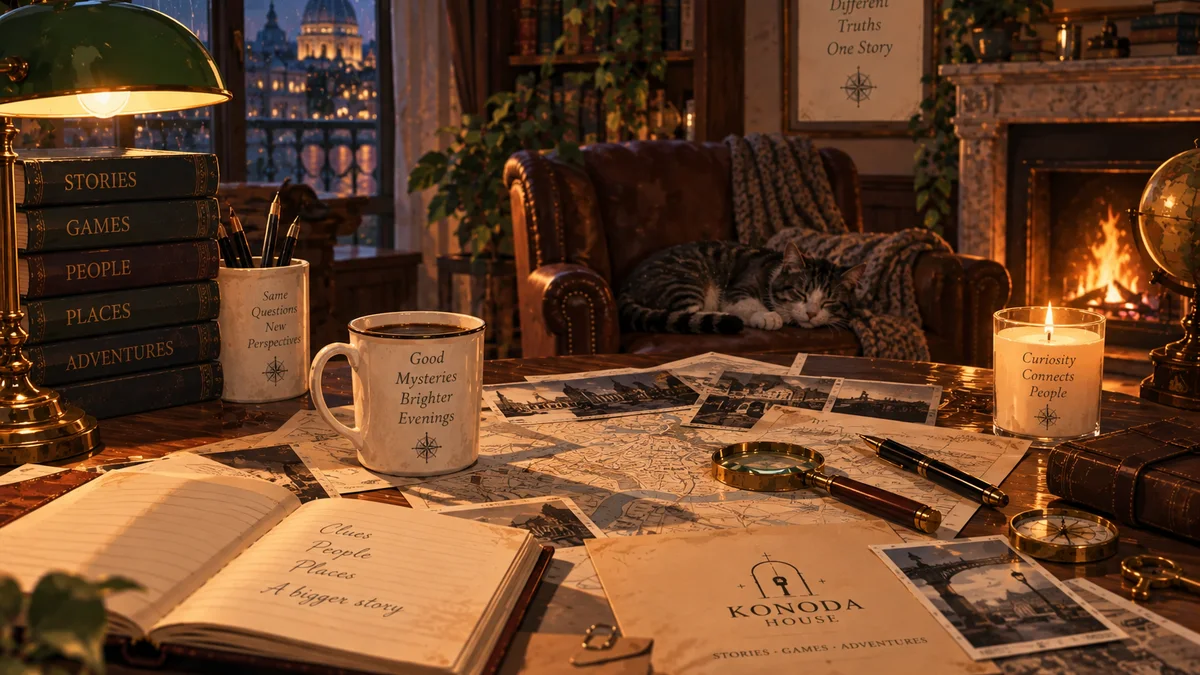
Brain games, puzzle books, and printable case files at one table
Brain games and puzzle books train solo focus, yet a printable case file can give the same friends a shared mystery without another grid of riddles on the coffee table.
Think of hosting as curating an experience rather than inventory management. If your group loves cardboard classics, borrow one title from a friend or rent from a library that lends games. If your group mixes skeptics and enthusiasts, lead with something that does not require memorizing a rulebook. A case night asks everyone to read, compare notes, and argue politely about timelines. Nobody feels behind because they missed the expansion from 2019.
Set expectations in the group chat before anyone asks what we are playing. Name the start time, the likely end time, and whether the night is cooperative, competitive, or a hybrid. Clarity prevents the awkward pause when guests arrive and stare at an empty coffee table. You can still serve tea and biscuits. You just are not obligated to explain worker placement to a cousin who only wanted conversation.
- State whether newcomers should skim a sample page before they arrive.
- Mention parking, building access, and allergy notes if food is involved.
- Offer a backup plan if headcount shifts by one or two people.
- Keep the first hour free of complex teach moments when possible.
Prep time: printing dossiers versus sorting puzzle components
Puzzle shelfs shine when the right group already knows the rhythm. Case files shine when the group is mixed: one person owns fifty titles, another has not rolled dice since childhood. Everyone receives the same briefing packet. The host prints, sorts exhibits, and facilitates discussion instead of policing hidden roles. That lowers the social cost of saying yes to an invite.
Storage is the quiet reason people stop buying games. Apartments lack shelves. Printable investigations live in a folder after the night ends. You recycle duplicates, keep a PDF backup, and free square footage. For hosts who rotate between friends every month, digital files also travel without a tote bag of awkwardly shaped boxes.
Compare total cost honestly. A new boxed game might sit unplayed after one rules fight. A case file costs paper, ink, and the download. Many publishers offer sample pages so you can test tone before guests arrive. If the sample reads like internal memos rather than a quiz, your table is likely ready for a ninety minute dossier.
- Shared reading instead of secret player powers.
- Flexible headcount for many home cases, often one to six at one table.
- No teaching phase beyond how we mark contradictions on paper.
- Replay value lives in debate, not in resetting the same board state.
Teaching puzzle rules versus briefing everyone on shared exhibits
Clear the dining table of mail piles and remote controls. Place a bright lamp over the center. Case nights often scatter components across felt mats; case nights spread letter-sized pages. Leave space for a timeline sketch on blank paper. Put drinks on a side table with lids when possible.
If someone still brings a favorite box game for after the main event, reserve a corner of the room so components do not mingle with evidence piles. Mixed nights work when phases are explicit: first the dossier, then a light card game if energy remains. Announcing phases prevents the person who loves heavy euros from opening a three-hour title while others are mid-alibi.
Assign one host task: photograph the layout before food arrives. After debate, papers look chaotic. A reference photo helps you restore order if you pause for dessert and return to the mystery.
Loose pages beat staples until you know the reading order. Label folders A, B, C if your printer scrambled sequence once. Keep highlighters optional; some guests prefer pencil only.
Table layout when the game is paper, not a grid of riddles
Finger foods beat saucy mains when clues are paper. Skewers, nuts in bowls, and brownies cut small keep hands cleaner than saucy pasta. If you want a full dinner, eat first, wipe the table, then open the dossier. Hungry guests rush endings; fed guests challenge weak theories with patience.
Pacing matters more than genre labels. A case night at home can run long when rules explanations stack. Case files front-load reading, then open conversation. Plan a five minute stretch break halfway. Tell guests at the start that phones can rest in a basket until you vote on the solution.
When conversation stalls, read two statements that mention the same room aloud. Fair mysteries hide connective tissue on the page. If theories still drift, ask each person to name one suspect and one line of evidence before you peek at the solution packet.
Do not rush the reveal because someone mentioned work tomorrow. Better to schedule a continuation next weekend than to read the ending while half the table stopped listening. Nights that respect pacing become traditions friends request again.
- Serve messy courses away from the main reading surface.
- Keep non-alcoholic drinks visible so nobody feels pushed to drink.
- Pause timers during dessert if your group treats sweets as sacred.
- Store leftover snacks away from clue piles so wrappers do not mix with exhibits.
Food and pacing for mixed puzzle-and-file nights
Some friends decline game nights because they imagine humiliation over obscure rules. Reassure them this evening rewards listening. No one must perform a character or dominate a market. Accusations can be plain language tied to documents on the table.
Watch for one loud voice steamrolling quieter readers who spotted a crucial date first. Rotate who reads witness statements aloud. Ask the quiet person what they think before you open the solution. Inclusive hosting beats displaying a shelf of unplayed shrink wrap.
If a guest asks whether this counts as a puzzle shelf, answer honestly: it is tabletop entertainment with paper and pencils. The label matters less than whether they felt included for ninety minutes.
After the solution, leave ten minutes for debrief. Which clue felt fairest? Which red herring fooled the table? That conversation turns a single invite into a standing monthly plan without anyone buying new cardboard.
Guests who prefer stories over speed-solving
Hosts who meet monthly can alternate between a borrowed boxed game and a printed case. Track what landed in a shared note: player count, runtime, who got frustrated. That log replaces guesswork at the shop and prevents repurchasing titles your group already disliked.
Seasonal themes help without requiring props. A Venetian case feels atmospheric in winter when windows are closed and lamps are warm. Summer nights can still use the same file if blinds cut glare on paper.
When budget is tight, sample pages are your preview screening. Read them alone once, then aloud with one partner to hear pacing. If sentences feel natural spoken, your full table will survive the opening briefing.
- Borrow before you buy when local friends own compatible titles.
- Keep a PDF on a tablet for guests who need larger text.
- Store played cases in a labeled folder with date and attendees.
- Recycle paper copies after debrief if closet space is limited.
Rotating formats without buying another logic book every month
Over-inviting is the first mistake. Too many chairs mean people cannot see the map and someone spoils details on a phone photo. Cap headcount near what your case supports.
Under-lighting is the second. Mood lamps are lovely; they also make twelve point text impossible. Balance ambiance with a bright central lamp.
Skipping the briefing is the third. Even confident readers benefit from two minutes on how you will handle breaks, food, and the solution envelope location.
Saving printer settings in a phone note prevents repeat mistakes: paper weight, colour versus black and white, which pages deserved a single colour map. A thirty-second checklist beats rediscovering smudged maps every month.
Treat weather as part of the plan. Rain means wet coats near sorted piles; hang a rack by the door so nobody drips on exhibit two.
Cap the group near what your file supports. Overcrowding one table means side conversations spoil surprises for the main team.
If younger teens join, set phone expectations up front. Photos of clue pages can spoil friends who play the same file later. A basket by the door where devices rest until dessert keeps focus on paper.
When the night ends, photograph which exhibits mattered most before recycling. Your future self will thank you when the next invite arrives and you forget which case felt too long for this crowd.
Choose the format that matches your actual guest list, not the fantasy list on a shop page. A quiet case night at home with four close friends can beat a crowded evening where nobody finishes the story.
Keep a shared list of what you played, who attended, and whether the pacing felt right overall. That note replaces guesswork when someone asks what we should do next month on the group chat.
Look for previews that read like memos, maps, and witness statements rather than a trivia list. Your group should argue about timelines, not about who remembers a random fact from page nine.
If you are comparing options online, filter reviews that mention reading time and whether roles are mandatory. A focused dossier beats a long script nobody finishes on a work night.
Check language and measurement units if friends are bilingual. A case set in a vivid historical city can still feel approachable when the writing stays concrete on the page.
If half the group expects worker placement and half expects witness statements, split the evening into two labeled phases so nobody feels tricked into the wrong format.
Sample pages from a collaborative case file reveal tone faster than reading a board game forum thread about optimal strategy.
When you lend a printed dossier, include a note about which pages contain the solution so borrowers do not mark the wrong stack.
Prep note 1: jot one line after each night about whether the table wanted cardboard mechanics or shared reading. That habit steers the next invite toward printable case files or a lighter boxed title without another impulse buy.
Prep note 2: jot one line after each night about whether the table wanted cardboard mechanics or shared reading. That habit steers the next invite toward printable case files or a lighter boxed title without another impulse buy.
Prep note 3: jot one line after each night about whether the table wanted cardboard mechanics or shared reading. That habit steers the next invite toward printable case files or a lighter boxed title without another impulse buy.
If half the group wants timed Sudoku and half wants witness statements, split the evening into two labeled phases so nobody feels tricked into the wrong format.
Try a printable case set in Venice
When brain games and puzzle books are not enough for a full table of friends, Theft at Venier Palace is a collaborative case set in Venice in 1774. A portrait vanishes from a restoration studio, and five people had motive, access, or opportunity. It is built for one to six players, roughly ninety to one hundred twenty minutes, with shared documents instead of secret roles. Buy the case and print the PDF at home, and see whether the pace matches the evening you pictured before you commit to a longer catalog.